When a dealership treats every inquiry as someone else's follow-up, good opportunities can disappear between the first message and the showroom visit. A business development center, or BDC, creates clear ownership for that part of the customer journey.
See how BDC Promotions helps dealerships strengthen lead engagement and appointment generation.
In practical terms, what is a bdc for automotive dealerships? It is a dedicated function that manages inbound and outbound customer communication, follows up with prospects, answers questions, qualifies interest, and sets or confirms sales and service appointments. BDC representatives typically work across phone, email, chat, and CRM workflows, then pass useful customer details to the dealership team handling the next step.
The BDC is not a replacement for showroom sales staff. Its value comes from keeping communication organized before and after an appointment, so sales and service personnel can focus on customers who are ready for an in-person conversation. The difference between a BDC that creates activity and one that supports dealership results starts with how the role is structured, operated, and measured.
What Is a BDC for Automotive Dealerships?
A business development center, or BDC, is a dedicated dealership function for managing customer communication before the shopper arrives at the store. Its work commonly includes responding to inbound inquiries, making outbound follow-up calls, setting appointments, and recording activity in the customer relationship management system (CRM). In practical terms, the BDC helps turn questions and unworked leads into organized conversations and scheduled next steps.
The role can support both sales and service. On the sales side, representatives may respond to questions about vehicles, availability, and the buying process, then work toward a visit or test drive. On the service side, the team may help customers schedule maintenance or repair appointments and confirm those visits. The exact scope depends on the dealership's process and the BDC's responsibilities. A BDC can be operated by the dealership or by an outside provider, but the core purpose remains customer follow-up and appointment development.
Inbound and outbound communication
Inbound communication begins when a customer contacts the dealership. That contact may arrive through a phone call, email, online chat, or another lead source. The representative's job is to respond professionally, understand what the customer needs, answer what they can, and determine the appropriate next step.
Outbound communication starts with the dealership. A representative may follow up with an internet lead, reconnect with a customer who has gone quiet, confirm an appointment, or contact a prospect who may be ready for another conversation. Both directions matter. A BDC is not simply a call center that answers phones. It is a structured follow-up function that keeps communication moving and documents the interaction in the CRM.
Appointment setting and CRM activity
Appointment setting is a central BDC responsibility. The representative works with the customer's timing and stated needs to schedule a visit, test drive, sales conversation, or service appointment. The appointment should then be recorded accurately so the dealership knows what was discussed, when the customer is expected, and which team member owns the next step.
CRM activity gives the dealership a working record of those conversations. Representatives may review new leads, log calls and messages, update appointment details, and flag information that showroom or service staff need before the customer arrives. That record supports a cleaner handoff and makes follow-up easier to manage.
BDC representatives and floor salespeople have different roles
BDC representatives generally work before the showroom interaction. They focus on communication, follow-up, qualification, and appointments. Floor salespeople focus on the in-person experience, including greeting walk-ins, conducting test drives, discussing vehicle options, negotiating, and closing the deal. The BDC does not replace floor sales. It complements the sales team by developing and organizing opportunities before handoff. The roles are distinct, even when they share information and coordinate closely.
What Does a Dealership BDC Do Each Day?
A dealership BDC turns incoming interest into organized conversations and next steps. The work starts when a shopper submits a lead, sends a message, calls, or asks a question through another dealership channel. A BDC reviews the inquiry, identifies what the shopper needs, and responds through the most appropriate channel. The objective is not simply to collect more leads. It is to keep opportunities from being abandoned and move qualified shoppers toward a useful conversation or appointment.
1. Review and route new inquiries
The day begins with visibility into new activity. BDC staff review leads and conversations in the dealership's systems, confirm the source and subject of each inquiry, and determine who should own the next step. A vehicle question may need inventory context. A service request may need to reach the service team. A shopper who is ready to schedule should not remain in a general queue.
Lead routing means assigning the opportunity to the right person, department, or follow-up path. Clear routing reduces confusion between the BDC, sales team, and service staff. It also establishes ownership, so the dealership can see whether the next action happened rather than assuming someone else handled it.
2. Respond and continue the conversation
Speed to lead is the operating discipline of responding promptly after an inquiry arrives. It does not mean sending a generic message and moving on. The representative should acknowledge the shopper's question, provide an accurate next step, and ask a relevant question when more information is needed.
Multi-channel communication gives the BDC more than one way to maintain contact. Depending on the dealership's setup, the workflow may include Messenger, email, phone, CRM coordination, Meta Ads, and Google Ads management. Our guide to paid social advertising for automotive dealerships provides related context on the advertising side of that workflow. Each channel should support the same customer record and conversation history, rather than creating disconnected follow-up.
For teams that need a clearer view of active conversations and customer data, our automotive dealership CRM buyer guide provides a related resource. A connected CRM view helps representatives prioritize current opportunities without losing track of earlier inquiries.
3. Follow up systematically and set appointments
Many shoppers do not decide during the first exchange. Systematic follow-up gives the BDC a defined way to revisit unanswered questions, confirm interest, and offer a practical next step. Follow-up can include phone calls, emails, messages, and appointment reminders, with the timing and content guided by the conversation instead of a one-size-fits-all script.
When the shopper is ready, the representative works to set an appointment and records the details in the CRM. The note should make the handoff useful: the customer's stated needs, vehicle or service interest, preferred timing, questions, and any commitments already made. The assigned dealership employee then knows why the customer is coming in and what to prepare.
A strong daily workflow ends with clear ownership, not just an appointment on a calendar. The BDC, CRM, and sales or service team should agree on who owns confirmation, arrival follow-up, and any next action after the appointment. That continuity connects communication activity to showroom and service outcomes.
In-House vs. Outsourced BDC: What Changes?
The core BDC function stays similar in either model: responding to shoppers, following up, setting appointments, and helping sales or service teams prepare for the next interaction. The difference is who owns the people, tools, workflows, and daily management. Dealerships can operate a BDC internally or use an outside provider, so the better choice depends on operational fit rather than a universal rule.
How in-house and outsourced BDC models typically differ
| Area | In-house BDC | Outsourced BDC |
|---|---|---|
| Ownership | The dealership owns the function and sets its operating priorities. | An outside provider manages the BDC function under an agreed scope and service process. |
| Staffing | The dealership recruits, trains, schedules, coaches, and retains representatives. | The provider supplies and manages representatives, training, scheduling, and coverage. |
| Coverage | Coverage is built around the dealership's available staff and operating hours. | Coverage can be structured around changing lead volume and dealership needs, subject to the provider's process. |
| Process control | Managers can shape scripts, escalation rules, CRM habits, and follow-up procedures directly. | The provider brings an established process, which must be aligned with dealership goals, systems, and customer expectations. |
| Oversight | Dealership leaders handle quality reviews, performance coaching, reporting, and handoffs. | The dealership reviews provider reporting and outcomes while the provider manages day-to-day BDC oversight. |
When internal control matters most
An in-house team may suit a dealership that wants close cultural alignment, direct coaching, and immediate control over processes. Internal representatives can become deeply familiar with the dealership's inventory, departments, customer expectations, and preferred handoff style. That control also brings responsibility. The dealership must manage equipment, staffing, processes, training, quality, and turnover, not just assign leads.
When outside capacity helps
An outsourced model may be useful when a dealership has coverage gaps, fluctuating demand, limited recruiting capacity, or a need for a more structured follow-up operation. An external team can provide flexibility as needs change, but outsourcing does not remove the need for accountability. Before choosing a provider, confirm how conversations are documented, how appointments are defined, how leads reach the CRM, who owns the handoff, and how quality is reviewed.
Neither model is automatically better. Compare the operational burden, desired control, coverage requirements, CRM workflow, and oversight capacity. The right BDC is the one that consistently turns customer communication into organized follow-up and well-managed appointment opportunities.
Which BDC Metrics Connect Activity to Revenue?
A useful BDC report does more than count leads or list the number of calls placed. It shows whether dealership inquiries received a timely response, became meaningful conversations, turned into appointments, and ultimately produced showroom or service outcomes. That hierarchy helps leaders separate busywork from progress without pretending that every sale can be attributed to one touchpoint.
Start with response and contact quality
Response time measures how quickly the team acts after a new inquiry arrives. Review it by channel, time period, and representative when possible. The goal is not simply to report an average. A useful review asks whether lead routing worked, whether the customer received a relevant answer, and whether the response happened within the dealership's agreed operating standard.
Contact rate shows how often the BDC reaches an actual prospect rather than merely recording an attempted call or message. Pair it with qualified conversations, which indicate that the shopper's needs, vehicle interest, timing, trade-in, or service request were understood well enough to determine a next step. These measures reveal the quality of engagement before an appointment exists.
Track the appointment path
Appointments set is the next activity-to-outcome measure. Define an appointment consistently so the report distinguishes a scheduled time from a vague invitation to visit. Then track show rate, or how often scheduled customers actually arrive or complete the intended service interaction. A high appointment count with weak attendance may point to confirmation, expectation-setting, timing, or handoff problems.
The handoff should be visible in the record. When a BDC schedules a customer, dealership staff need the relevant conversation and customer needs before the visit. A dealership can use a documented CRM workflow so the communication and follow-up have a place to continue. This makes it easier to review whether the assigned salesperson or service team received the opportunity and acted on it.
Close the loop with attribution and aging
Sold attribution connects BDC activity to a completed vehicle sale or service outcome when the CRM and dealership processes support that connection. It should be treated as an attribution view, not proof that the BDC acted alone. Multiple channels, employees, and visits may influence one customer. The important question is whether the path from inquiry to conversation, appointment, show, and outcome can be reviewed consistently.
Lead aging identifies opportunities that have remained untouched, unresolved, or inactive for too long. Segment aging by lead status and source rather than hiding every record in one total. Older leads may require a different follow-up approach, a clear disposition, or escalation to a manager.
Set a reporting cadence that supports action
Daily review is appropriate for response time, routing failures, unanswered conversations, and appointment handoffs. A weekly review can examine contact quality, appointments set, show rate, aging, and representative coaching needs. A monthly leadership view should connect those operating measures with sold attribution, service outcomes, channel performance, and process changes. The exact cadence should match dealership volume, but every report should answer one practical question: what should the team change next?
Need help translating these metrics into a dealership-specific process? Call BDC Promotions at 352-207-1074 to discuss lead response, follow-up, and appointment generation.
How Should You Evaluate a BDC Agency?
A useful evaluation goes beyond asking how many leads an agency can handle. The right questions reveal whether the provider can fit your dealership's workflow, protect the customer experience, and connect communication activity to appointments and showroom outcomes.
- Ask for relevant proof, not broad promises Ask how the agency works with automotive dealerships, what types of sales or service conversations it manages. And whether it can provide references or documented examples that match your situation. Look for specific evidence of process and accountability, not unsupported awards, guarantees, or impressive-sounding percentages. If a provider discusses results, ask how those results were defined, attributed, and measured.
- Clarify response standards and follow-up process Ask what happens when a new inquiry arrives, how quickly the first response is expected, and how follow-up continues when the shopper does not answer. A credible process should explain lead ownership, escalation, contact attempts, and lead aging. It should also address how the team prevents opportunities from being abandoned instead of treating an initial reply as completed work.
- Map every channel the agency will manage Confirm whether the scope includes phone, email, text, website forms, chat, or Messenger, and ask how those conversations are coordinated. Multiple channels are valuable only when the customer receives a consistent experience and the dealership can see the full history. Every dealership should confirm which channels are included in its agreement, how they are documented, and how advertising conversations connect to the BDC workflow.
- Test CRM and lead-routing compatibility Ask which CRM systems and lead sources the agency can support, what information is written back, and who owns the setup when routing fails. The handoff should be visible and usable by dealership staff. Our car dealership marketing agency guide provides another resource for comparing agency scope and fit. Use that kind of documentation to ask practical implementation questions before launch.
- Define an appointment before measuring appointment performance Ask what counts as an appointment: a requested time, a confirmed time, or a scheduled visit with the customer's needs and vehicle or service details recorded. Then ask how show rate is tracked and how no-shows, cancellations, reschedules, and sold or completed service outcomes are attributed. Without shared definitions, two teams can report different results from the same conversations.
- Review reporting, quality control, and ownership Request the reporting cadence and the fields included. Useful categories can include response time, contact rate, qualified conversations, appointments set, show rate, lead aging, and sold attribution. Ask whether calls or messages are reviewed for quality, how coaching is handled, and who owns the handoff to sales or service. A strong operating relationship makes those responsibilities explicit rather than leaving them between the agency and the dealership.
When Is an Outsourced BDC a Good Fit?
An outsourced BDC may be worth considering when a dealership has meaningful lead or call volume but not enough consistent coverage to respond. Follow up, and set appointments reliably. Missed calls, aging internet leads, inconsistent outreach, or sales staff dividing their attention between showroom customers and digital inquiries are practical signals to investigate. The goal is not simply to create more activity. It is to create a dependable process that moves qualified shoppers toward a dealership conversation and appointment.
Coverage gaps can be especially important when a store receives inquiries across several channels, such as phone, email, messaging, web forms, or chat. An outside team may also fit when staffing, turnover, scheduling, or training makes it difficult to maintain the same response standards every day. In that situation, ask whether the provider can work within the dealership's CRM and lead-routing process, document customer context, and hand opportunities to the right salesperson or department. An outsourced model should strengthen the dealership's workflow, not create another disconnected inbox.
When an in-house model may be the better choice
In-house may be a better fit when the dealership already has strong BDC leadership. Stable staffing, clear quality controls, and the capacity to manage equipment, processes, training, and daily coverage. Internal representatives can develop close familiarity with the store's inventory, culture, promotions, sales team, and service operation. That control can matter when leadership wants direct oversight of every conversation or has the resources to improve the function continuously.
Neither model works automatically. An in-house team can still lose opportunities through weak follow-up or unclear handoffs. While an outsourced team can underperform if the dealership does not define access, ownership, escalation, and appointment expectations. Before deciding, review missed-call data, response time, contact rate, appointment-setting activity, show-rate tracking, and sold or serviced attribution. Also clarify reporting cadence, quality assurance, covered channels, CRM compatibility, data access, and who owns the customer handoff.
Dealership leaders evaluating an agency should compare the proposed process with their actual coverage gaps, internal capabilities, and measurement standards. The right question is not whether outsourcing is always better. It is whether the operating model can consistently support the customer experience and outcomes the dealership needs.
Ready to compare your current process with a BDC agency model? Call BDC Promotions at 352-207-1074 to discuss your dealership's lead engagement and appointment-generation needs.
Talk with BDC Promotions about your dealership's lead response and appointment-generation process.
Frequently Asked Questions
What does BDC stand for in automotive?
BDC stands for Business Development Center. In an automotive dealership, it is the function responsible for customer communication, lead follow-up, appointment setting, and coordination with sales or service staff.
What is the role of a BDC?
A BDC responds to inbound inquiries, follows up with prospects, answers questions, confirms appointments, and records activity in the CRM. Its job is to help turn shopper conversations into qualified opportunities and clear handoffs for the dealership team.
Do BDC reps get commission?
Compensation varies by dealership, employer, role, and pay plan. Some plans may include incentives tied to activity or appointments, while others may use a different structure. Ask for the written compensation plan instead of assuming every BDC representative is paid the same way.
What does a BDC representative do each day?
A representative may review new CRM leads, make inbound and outbound calls, respond to email or chat, qualify customer needs, schedule appointments, and confirm upcoming visits. The specific mix depends on whether the BDC supports sales, service, or both.
Ready to Discuss Your Dealership's BDC Needs?
A closer look at your lead response, follow-up, and appointment-setting process can help clarify where a BDC may fit. Call BDC Promotions at 352-207-1074 to discuss your dealership's lead engagement and appointment-generation needs.
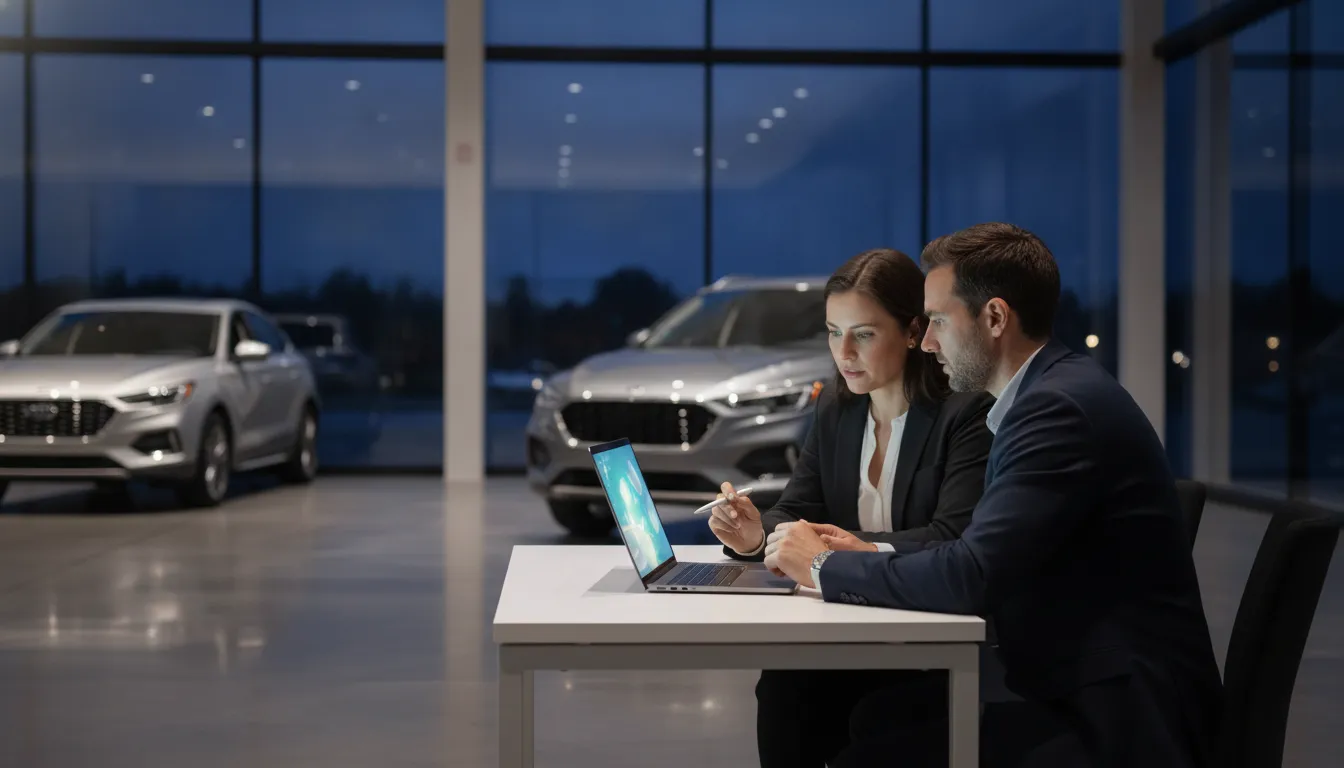
id item_MTJB2B6B8K6D0RRR667XTJGEEH title What Is a BDC for Automotive Dealerships? Guide metaTitle What Is a BDC for Automotive Dealerships? Guide description Learn what is a BDC for automotive dealerships, how the team works, and how to evaluate BDC processes, metrics, handoffs, and agency fit for your store. slug what-is-a-bdc-for-automotive-dealerships image https://zleague-public-prod.s3.us-east-2.amazonaws.com/article_images/9951b3b9-96d6-4185-a938-f509cd50ae67/what-is-a-bdc-for-automotive-dealerships-guide-714113.webp imageAlt Automotive dealership team coordinating customer conversations and appointments targetKeyword what is a bdc for automotive dealerships
When a dealership treats every inquiry as someone else's follow-up, good opportunities can disappear between the first message and the showroom visit. A business development center, or BDC, creates clear ownership for that part of the customer journey.
See how BDC Promotions helps dealerships strengthen lead engagement and appointment generation.
In practical terms, what is a bdc for automotive dealerships? It is a dedicated function that manages inbound and outbound customer communication, follows up with prospects, answers questions, qualifies interest, and sets or confirms sales and service appointments. BDC representatives typically work across phone, email, chat, and CRM workflows, then pass useful customer details to the dealership team handling the next step.
The BDC is not a replacement for showroom sales staff. Its value comes from keeping communication organized before and after an appointment, so sales and service personnel can focus on customers who are ready for an in-person conversation. The difference between a BDC that creates activity and one that supports dealership results starts with how the role is structured, operated, and measured.
What Is a BDC for Automotive Dealerships?
A business development center, or BDC, is a dedicated dealership function for managing customer communication before the shopper arrives at the store. Its work commonly includes responding to inbound inquiries, making outbound follow-up calls, setting appointments, and recording activity in the customer relationship management system (CRM). In practical terms, the BDC helps turn questions and unworked leads into organized conversations and scheduled next steps.
The role can support both sales and service. On the sales side, representatives may respond to questions about vehicles, availability, and the buying process, then work toward a visit or test drive. On the service side, the team may help customers schedule maintenance or repair appointments and confirm those visits. The exact scope depends on the dealership's process and the BDC's responsibilities. A BDC can be operated by the dealership or by an outside provider, but the core purpose remains customer follow-up and appointment development.
Inbound and outbound communication
Inbound communication begins when a customer contacts the dealership. That contact may arrive through a phone call, email, online chat, or another lead source. The representative's job is to respond professionally, understand what the customer needs, answer what they can, and determine the appropriate next step.
Outbound communication starts with the dealership. A representative may follow up with an internet lead, reconnect with a customer who has gone quiet, confirm an appointment, or contact a prospect who may be ready for another conversation. Both directions matter. A BDC is not simply a call center that answers phones. It is a structured follow-up function that keeps communication moving and documents the interaction in the CRM.
Appointment setting and CRM activity
Appointment setting is a central BDC responsibility. The representative works with the customer's timing and stated needs to schedule a visit, test drive, sales conversation, or service appointment. The appointment should then be recorded accurately so the dealership knows what was discussed, when the customer is expected, and which team member owns the next step.
CRM activity gives the dealership a working record of those conversations. Representatives may review new leads, log calls and messages, update appointment details, and flag information that showroom or service staff need before the customer arrives. That record supports a cleaner handoff and makes follow-up easier to manage.
BDC representatives and floor salespeople have different roles
BDC representatives generally work before the showroom interaction. They focus on communication, follow-up, qualification, and appointments. Floor salespeople focus on the in-person experience, including greeting walk-ins, conducting test drives, discussing vehicle options, negotiating, and closing the deal. The BDC does not replace floor sales. It complements the sales team by developing and organizing opportunities before handoff. The roles are distinct, even when they share information and coordinate closely.
What Does a Dealership BDC Do Each Day?
A dealership BDC turns incoming interest into organized conversations and next steps. The work starts when a shopper submits a lead, sends a message, calls, or asks a question through another dealership channel. A BDC reviews the inquiry, identifies what the shopper needs, and responds through the most appropriate channel. The objective is not simply to collect more leads. It is to keep opportunities from being abandoned and move qualified shoppers toward a useful conversation or appointment.
1. Review and route new inquiries
The day begins with visibility into new activity. BDC staff review leads and conversations in the dealership's systems, confirm the source and subject of each inquiry, and determine who should own the next step. A vehicle question may need inventory context. A service request may need to reach the service team. A shopper who is ready to schedule should not remain in a general queue.
Lead routing means assigning the opportunity to the right person, department, or follow-up path. Clear routing reduces confusion between the BDC, sales team, and service staff. It also establishes ownership, so the dealership can see whether the next action happened rather than assuming someone else handled it.
2. Respond and continue the conversation
Speed to lead is the operating discipline of responding promptly after an inquiry arrives. It does not mean sending a generic message and moving on. The representative should acknowledge the shopper's question, provide an accurate next step, and ask a relevant question when more information is needed.
Multi-channel communication gives the BDC more than one way to maintain contact. Depending on the dealership's setup, the workflow may include Messenger, email, phone, CRM coordination, Meta Ads, and Google Ads management. Our guide to paid social advertising for automotive dealerships provides related context on the advertising side of that workflow. Each channel should support the same customer record and conversation history, rather than creating disconnected follow-up.
For teams that need a clearer view of active conversations and customer data, our automotive dealership CRM buyer guide provides a related resource. A connected CRM view helps representatives prioritize current opportunities without losing track of earlier inquiries.
3. Follow up systematically and set appointments
Many shoppers do not decide during the first exchange. Systematic follow-up gives the BDC a defined way to revisit unanswered questions, confirm interest, and offer a practical next step. Follow-up can include phone calls, emails, messages, and appointment reminders, with the timing and content guided by the conversation instead of a one-size-fits-all script.
When the shopper is ready, the representative works to set an appointment and records the details in the CRM. The note should make the handoff useful: the customer's stated needs, vehicle or service interest, preferred timing, questions, and any commitments already made. The assigned dealership employee then knows why the customer is coming in and what to prepare.
A strong daily workflow ends with clear ownership, not just an appointment on a calendar. The BDC, CRM, and sales or service team should agree on who owns confirmation, arrival follow-up, and any next action after the appointment. That continuity connects communication activity to showroom and service outcomes.
In-House vs. Outsourced BDC: What Changes?
The core BDC function stays similar in either model: responding to shoppers, following up, setting appointments, and helping sales or service teams prepare for the next interaction. The difference is who owns the people, tools, workflows, and daily management. Dealerships can operate a BDC internally or use an outside provider, so the better choice depends on operational fit rather than a universal rule.
| Area | In-house BDC | Outsourced BDC |
|---|---|---|
| Ownership | The dealership owns the function and sets its operating priorities. | An outside provider manages the BDC function under an agreed scope and service process. |
| Staffing | The dealership recruits, trains, schedules, coaches, and retains representatives. | The provider supplies and manages representatives, training, scheduling, and coverage. |
| Coverage | Coverage is built around the dealership's available staff and operating hours. | Coverage can be structured around changing lead volume and dealership needs, subject to the provider's process. |
| Process control | Managers can shape scripts, escalation rules, CRM habits, and follow-up procedures directly. | The provider brings an established process, which must be aligned with dealership goals, systems, and customer expectations. |
| Oversight | Dealership leaders handle quality reviews, performance coaching, reporting, and handoffs. | The dealership reviews provider reporting and outcomes while the provider manages day-to-day BDC oversight. |
When internal control matters most
An in-house team may suit a dealership that wants close cultural alignment, direct coaching, and immediate control over processes. Internal representatives can become deeply familiar with the dealership's inventory, departments, customer expectations, and preferred handoff style. That control also brings responsibility. The dealership must manage equipment, staffing, processes, training, quality, and turnover, not just assign leads.
When outside capacity helps
An outsourced model may be useful when a dealership has coverage gaps, fluctuating demand, limited recruiting capacity, or a need for a more structured follow-up operation. An external team can provide flexibility as needs change, but outsourcing does not remove the need for accountability. Before choosing a provider, confirm how conversations are documented, how appointments are defined, how leads reach the CRM, who owns the handoff, and how quality is reviewed.
Neither model is automatically better. Compare the operational burden, desired control, coverage requirements, CRM workflow, and oversight capacity. The right BDC is the one that consistently turns customer communication into organized follow-up and well-managed appointment opportunities.
Which BDC Metrics Connect Activity to Revenue?
A useful BDC report does more than count leads or list the number of calls placed. It shows whether dealership inquiries received a timely response, became meaningful conversations, turned into appointments, and ultimately produced showroom or service outcomes. That hierarchy helps leaders separate busywork from progress without pretending that every sale can be attributed to one touchpoint.
Start with response and contact quality
Response time measures how quickly the team acts after a new inquiry arrives. Review it by channel, time period, and representative when possible. The goal is not simply to report an average. A useful review asks whether lead routing worked, whether the customer received a relevant answer, and whether the response happened within the dealership's agreed operating standard.
Contact rate shows how often the BDC reaches an actual prospect rather than merely recording an attempted call or message. Pair it with qualified conversations, which indicate that the shopper's needs, vehicle interest, timing, trade-in, or service request were understood well enough to determine a next step. These measures reveal the quality of engagement before an appointment exists.
Track the appointment path
Appointments set is the next activity-to-outcome measure. Define an appointment consistently so the report distinguishes a scheduled time from a vague invitation to visit. Then track show rate, or how often scheduled customers actually arrive or complete the intended service interaction. A high appointment count with weak attendance may point to confirmation, expectation-setting, timing, or handoff problems.
The handoff should be visible in the record. When a BDC schedules a customer, dealership staff need the relevant conversation and customer needs before the visit. A dealership can use a documented CRM workflow so the communication and follow-up have a place to continue. This makes it easier to review whether the assigned salesperson or service team received the opportunity and acted on it.
Close the loop with attribution and aging
Sold attribution connects BDC activity to a completed vehicle sale or service outcome when the CRM and dealership processes support that connection. It should be treated as an attribution view, not proof that the BDC acted alone. Multiple channels, employees, and visits may influence one customer. The important question is whether the path from inquiry to conversation, appointment, show, and outcome can be reviewed consistently.
Lead aging identifies opportunities that have remained untouched, unresolved, or inactive for too long. Segment aging by lead status and source rather than hiding every record in one total. Older leads may require a different follow-up approach, a clear disposition, or escalation to a manager.
Set a reporting cadence that supports action
Daily review is appropriate for response time, routing failures, unanswered conversations, and appointment handoffs. A weekly review can examine contact quality, appointments set, show rate, aging, and representative coaching needs. A monthly leadership view should connect those operating measures with sold attribution, service outcomes, channel performance, and process changes. The exact cadence should match dealership volume, but every report should answer one practical question: what should the team change next?
Need help translating these metrics into a dealership-specific process? Call BDC Promotions at 352-207-1074 to discuss lead response, follow-up, and appointment generation.
How Should You Evaluate a BDC Agency?
A useful evaluation goes beyond asking how many leads an agency can handle. The right questions reveal whether the provider can fit your dealership's workflow, protect the customer experience, and connect communication activity to appointments and showroom outcomes.
- ### Ask for relevant proof, not broad promises
Ask how the agency works with automotive dealerships, what types of sales or service conversations it manages. And whether it can provide references or documented examples that match your situation. Look for specific evidence of process and accountability, not unsupported awards, guarantees, or impressive-sounding percentages. If a provider discusses results, ask how those results were defined, attributed, and measured.
- ### Clarify response standards and follow-up process
Ask what happens when a new inquiry arrives, how quickly the first response is expected, and how follow-up continues when the shopper does not answer. A credible process should explain lead ownership, escalation, contact attempts, and lead aging. It should also address how the team prevents opportunities from being abandoned instead of treating an initial reply as completed work.
- ### Map every channel the agency will manage
Confirm whether the scope includes phone, email, text, website forms, chat, or Messenger, and ask how those conversations are coordinated. Multiple channels are valuable only when the customer receives a consistent experience and the dealership can see the full history. Every dealership should confirm which channels are included in its agreement, how they are documented, and how advertising conversations connect to the BDC workflow.
- ### Test CRM and lead-routing compatibility
Ask which CRM systems and lead sources the agency can support, what information is written back, and who owns the setup when routing fails. The handoff should be visible and usable by dealership staff. Our car dealership marketing agency guide provides another resource for comparing agency scope and fit. Use that kind of documentation to ask practical implementation questions before launch.
- ### Define an appointment before measuring appointment performance
Ask what counts as an appointment: a requested time, a confirmed time, or a scheduled visit with the customer's needs and vehicle or service details recorded. Then ask how show rate is tracked and how no-shows, cancellations, reschedules, and sold or completed service outcomes are attributed. Without shared definitions, two teams can report different results from the same conversations.
- ### Review reporting, quality control, and ownership
Request the reporting cadence and the fields included. Useful categories can include response time, contact rate, qualified conversations, appointments set, show rate, lead aging, and sold attribution. Ask whether calls or messages are reviewed for quality, how coaching is handled, and who owns the handoff to sales or service. A strong operating relationship makes those responsibilities explicit rather than leaving them between the agency and the dealership.
When Is an Outsourced BDC a Good Fit?
An outsourced BDC may be worth considering when a dealership has meaningful lead or call volume but not enough consistent coverage to respond. Follow up, and set appointments reliably. Missed calls, aging internet leads, inconsistent outreach, or sales staff dividing their attention between showroom customers and digital inquiries are practical signals to investigate. The goal is not simply to create more activity. It is to create a dependable process that moves qualified shoppers toward a dealership conversation and appointment.
Coverage gaps can be especially important when a store receives inquiries across several channels, such as phone, email, messaging, web forms, or chat. An outside team may also fit when staffing, turnover, scheduling, or training makes it difficult to maintain the same response standards every day. In that situation, ask whether the provider can work within the dealership's CRM and lead-routing process, document customer context, and hand opportunities to the right salesperson or department. An outsourced model should strengthen the dealership's workflow, not create another disconnected inbox.
When an in-house model may be the better choice
In-house may be a better fit when the dealership already has strong BDC leadership. Stable staffing, clear quality controls, and the capacity to manage equipment, processes, training, and daily coverage. Internal representatives can develop close familiarity with the store's inventory, culture, promotions, sales team, and service operation. That control can matter when leadership wants direct oversight of every conversation or has the resources to improve the function continuously.
Neither model works automatically. An in-house team can still lose opportunities through weak follow-up or unclear handoffs. While an outsourced team can underperform if the dealership does not define access, ownership, escalation, and appointment expectations. Before deciding, review missed-call data, response time, contact rate, appointment-setting activity, show-rate tracking, and sold or serviced attribution. Also clarify reporting cadence, quality assurance, covered channels, CRM compatibility, data access, and who owns the customer handoff.
Dealership leaders evaluating an agency should compare the proposed process with their actual coverage gaps, internal capabilities, and measurement standards. The right question is not whether outsourcing is always better. It is whether the operating model can consistently support the customer experience and outcomes the dealership needs.
Ready to compare your current process with a BDC agency model? Call BDC Promotions at 352-207-1074 to discuss your dealership's lead engagement and appointment-generation needs.
Talk with BDC Promotions about your dealership's lead response and appointment-generation process.
Frequently Asked Questions
What does BDC stand for in automotive?
BDC stands for Business Development Center. In an automotive dealership, it is the function responsible for customer communication, lead follow-up, appointment setting, and coordination with sales or service staff.
What is the role of a BDC?
A BDC responds to inbound inquiries, follows up with prospects, answers questions, confirms appointments, and records activity in the CRM. Its job is to help turn shopper conversations into qualified opportunities and clear handoffs for the dealership team.
Do BDC reps get commission?
Compensation varies by dealership, employer, role, and pay plan. Some plans may include incentives tied to activity or appointments, while others may use a different structure. Ask for the written compensation plan instead of assuming every BDC representative is paid the same way.
What does a BDC representative do each day?
A representative may review new CRM leads, make inbound and outbound calls, respond to email or chat, qualify customer needs, schedule appointments, and confirm upcoming visits. The specific mix depends on whether the BDC supports sales, service, or both.
Ready to Discuss Your Dealership's BDC Needs?
A closer look at your lead response, follow-up, and appointment-setting process can help clarify where a BDC may fit. Call BDC Promotions at 352-207-1074 to discuss your dealership's lead engagement and appointment-generation needs.