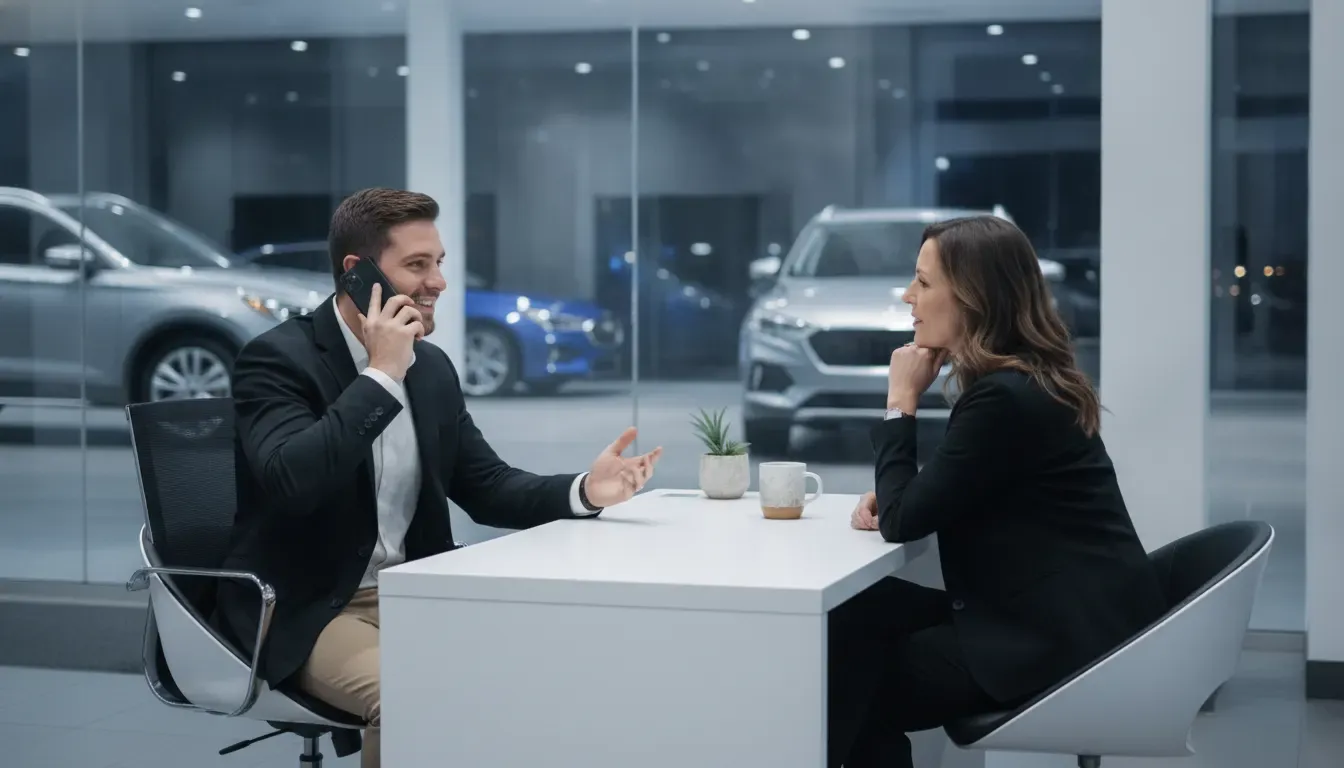
Speed to lead and Messenger advertising for automotive dealerships work best as one operating system, not two disconnected marketing activities. A paid social campaign can create attention, but the response workflow determines whether that attention becomes a useful conversation, a qualified appointment opportunity, and a prepared showroom handoff.
Talk with BDC Promotions about your dealership's marketing goals.
This guide is for dealership owners, general managers, general sales managers, marketing leaders, and BDC directors who want to connect campaign performance with what happens after a shopper responds. It explains the role of response speed, how click-to-Messenger ads work, how to assign ownership, what to measure, and how to build a practical rollout without promising that one tactic will solve every sales problem.
What is speed to lead in automotive dealership marketing?
Speed to lead is the time between a shopper's inquiry and a useful response from the dealership. In automotive marketing, a useful response does more than confirm that a form was received. It answers the shopper's immediate question, keeps the conversation moving, and creates a clear next step such as a vehicle detail, trade discussion, phone call, or appointment request.
Speed to lead is not the same as an instant acknowledgment
An automated message can be valuable when it confirms that the dealership received an inquiry or asks a simple qualifying question. It is not automatically a substantive human response. A generic message that says a representative will reach out later may satisfy a timestamp report while leaving the shopper's actual question unanswered.
That distinction matters because the first message often reveals the shopper's intent. Someone asking whether a vehicle is available needs a current answer. Someone responding to a trade-in campaign needs a simple path to share the vehicle details. Someone engaging with a payment message needs clear terms and an accurate explanation of what the dealership can confirm.
The four ownership questions every store should answer
A dealership should be able to answer four questions before a campaign launches:
- Who sees a new Messenger conversation or lead notification?
- Who sends the first useful response, and during which hours?
- Who handles qualification, vehicle questions, and appointment requests?
- Who receives the handoff, and what information must be recorded first?
BDC Promotions describes its dealership work around fast lead response, Facebook Messenger communication, paid social campaigns, and appointment generation. Its guide to choosing a car dealership marketing agency also emphasizes checking lead ownership, response expectations, reporting, and appointment outcomes before selecting a partner. Those are useful evaluation questions for any provider, including an in-house team.
Why does response time matter for dealership leads?
Response time matters because an online shopper's attention and willingness to talk can change quickly. Research supports treating speed as a serious operating variable, but it does not prove that speed alone sells a vehicle. A faster first response creates a better chance to reach and qualify an active shopper; accuracy, trust, follow-up, inventory, and the showroom team still determine what happens next.
What the lead-response research can tell a dealer
Harvard Business Review reported that companies responding to online leads within an hour were around seven times more likely to have a meaningful qualifying conversation than companies responding later. The same research found a large response gap: only 37 percent of audited companies responded within an hour, 23 percent never responded, and the companies that did respond within 30 days took an average of 42 hours to send a first response. Read the Harvard Business Review study on the short life of online sales leads for the original context and limitations.
Those figures come from a broad study of 2,241 US companies, not a promise about a particular dealership. They are useful because they show the size of the operational problem: a store can pay to create demand and still lose the opportunity through delay or non-response.
A separate Velocify contact-strategy study analyzed nearly 3.5 million leads and reported a 391 percent higher conversion rate when a first call attempt happened within one minute of lead generation. It also reported that 93 percent of converting leads in its dataset were contacted within six or fewer calls. The study cautions that the best strategy depends on the industry, product, and selling process, so a dealership should use those figures as directional evidence, then establish its own baseline. The Velocify contact strategy study contains the source details.
Use a response hierarchy instead of one vanity SLA
Dealers often ask for one answer to the question, "How fast do we respond?" A stronger operating model uses a hierarchy:
- Routing speed: how quickly the lead reaches the right owner.
- First useful response: how quickly the shopper gets an accurate, relevant answer.
- Substantive contact: whether a real conversation begins through Messenger, phone, text, or another approved channel.
- Appointment progression: whether the shopper agrees to a next step and receives clear confirmation.
- Showroom handoff: whether the salesperson receives the context needed to welcome the shopper.
This framework avoids the auto-reply illusion. A timestamp can prove that a message was sent, but it cannot prove that the message helped the shopper. For that, the dealership must review conversation quality, question resolution, appointment movement, and handoff completeness.
How do Messenger ads create dealership conversations?
Messenger advertising gives a dealership a paid path from a social impression into a conversation. Meta defines ads that click to message as ads that send people directly into a conversation with a business in Messenger, Instagram, or WhatsApp. A dealer can choose the destination and campaign objective, then build a response experience that connects the ad's promise to the shopper's next question.
Click-to-Messenger ads versus landing-page forms
A landing-page form asks a shopper to leave the feed, load a page, complete fields, and wait for a response. A click-to-Messenger ad keeps the next step inside a familiar messaging environment. That does not make it automatically better. The right choice depends on the offer, the information needed, the dealership's response coverage, and how accurately the CRM or inbox can record the conversation.
Messenger is especially useful when the shopper's first step is a question. A campaign can invite a conversation about a vehicle, a trade, an event, a service offer, or a dealership promotion. The campaign should not imply that a message can answer what the team has not verified. Inventory changes, price terms, rebates, and availability must stay current.
Choose the campaign objective based on the business job
Meta documentation describes four objectives for ads that click to Messenger: traffic, engagement, leads, and sales. Traffic is intended to send people to a conversation. Engagement is designed to reach people more likely to respond. Leads is designed to collect leads in Messenger. Sales is intended for purchase-oriented outcomes or tracked conversion events. The objective should match the measurement plan, not simply the metric that looks largest in a weekly report.
| Campaign job | Conversation role | Dealer question |
|---|---|---|
| Start conversations | Give a shopper an easy path to ask | Can the team answer promptly? |
| Generate leads | Use questions to collect and qualify interest | Who reviews completed and incomplete flows? |
| Support a sale | Connect messaging to a tracked sales action | Which conversion event is reliable? |
| Re-engage an audience | Bring a relevant shopper back into a conversation | Is the message still accurate and timely? |
Design for the first reply and the incomplete lead
Meta's Messenger lead-generation documentation includes an important operational detail: the business can view the ad-generated conversation after the potential customer sends the first reply. Meta also says that complete and incomplete leads can appear in Page Inbox for follow-up. That means a dealership should decide what happens when a shopper does not finish the automated flow, selects a disqualifying answer, or stops replying. A non-complete lead is not automatically worthless; it is a signal that needs a defined review path.
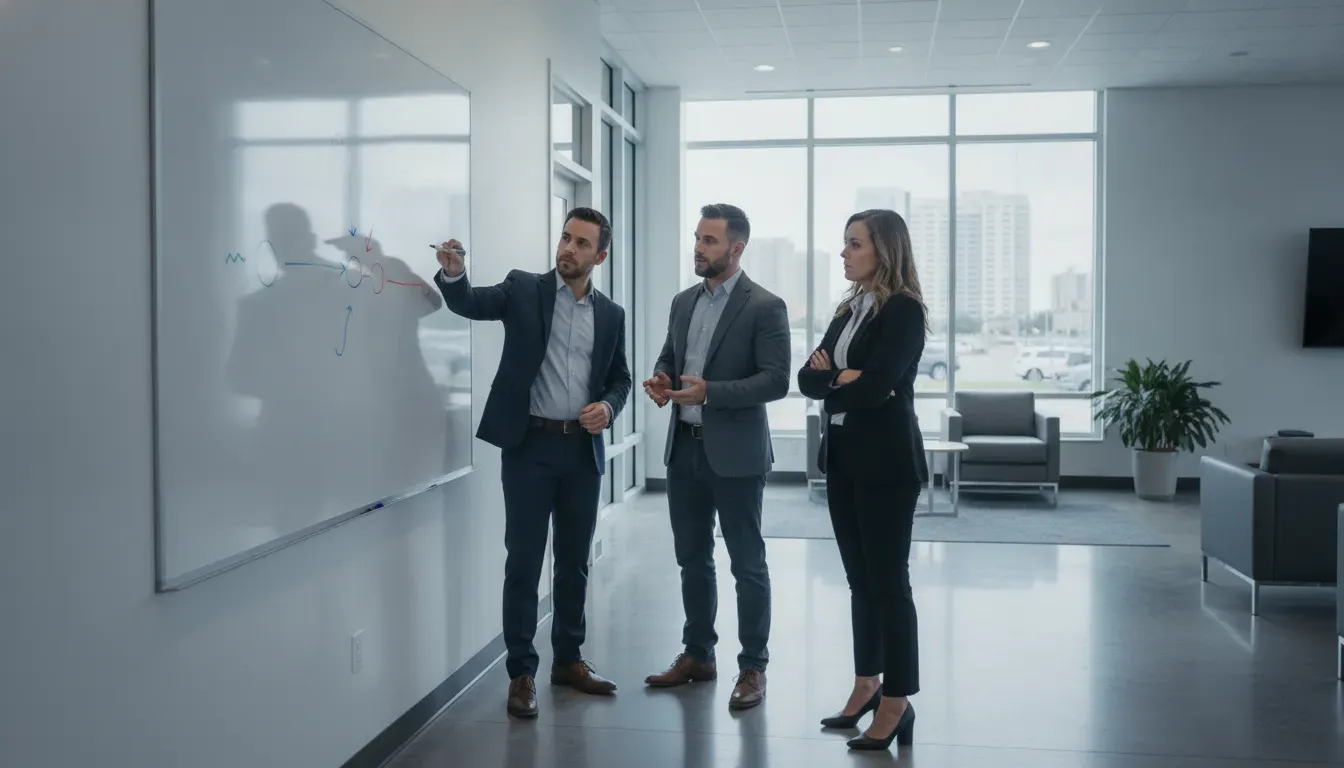
Meta also supports stop keywords and thread-control options for Messenger lead-generation flows. A connected app can receive lead information through supported handoff mechanisms, but a technical handoff still needs a human operating rule. The dealership should know which inbox, CRM, or specialist owns the conversation after the automated step ends.
How do you build a dealership speed-to-lead and Messenger workflow?
A dealership speed-to-lead workflow should connect campaign promise, response ownership, qualification, appointment setting, and floor handoff. The following eight-step chain gives a GM or BDC director a practical way to map the work before expanding spend. Each step should have an owner, an expected time, and a record that managers can inspect.
1. Choose one shopper action and one campaign promise
Start with a single job. Is the campaign asking the shopper to check availability, discuss a trade, learn about a promotion, request a test drive, or ask a service question? Combining several promises in one message makes both the ad and the response harder to manage. The first response should be written around the action the campaign actually invited.
2. Route the conversation to a named owner
A notification is not ownership. Assign the first response to a BDC coordinator, an approved Messenger specialist, an in-house team member, or a named partner. Define the backup owner for breaks, weekends, and after-hours periods. If a salesperson is responsible, make sure floor traffic and digital response duties do not compete without coverage.
3. Answer the specific question first
Read the shopper's words before sending a template. If the person asks whether the vehicle is available, verify availability and answer that question. If the ad promoted a trade conversation, begin with the trade details needed for a useful estimate. If the question requires a manager or inventory check, say what is being verified and set a realistic next step.
4. Ask one useful qualifying question
A good qualifying question moves the shopper forward without turning the first interaction into an interrogation. Examples include asking whether the shopper has a trade, which vehicle they are considering, whether they prefer a call or message, or which day is convenient for a visit. One relevant question is usually more useful than a long form of disconnected fields.
5. Offer a low-friction next step
Once the initial question is answered, give the shopper a clear choice. The next step might be a short call, a video walkaround, a test drive time, a trade evaluation, or more vehicle details. Use language that lets the shopper choose rather than forcing a premature commitment. A conversation can be successful even when the correct next step is information, not an appointment that day.
6. Escalate vehicle, trade, finance, and availability questions
Automation can support consistent questions, but it should not improvise facts. Escalate details that depend on current inventory, customer eligibility, financing terms, rebates, pricing, vehicle condition, or manager approval. The person receiving the escalation should be able to see the ad angle, the shopper's answers, and the exact question that remains open.
7. Record the conversation and appointment context
Record the information a salesperson needs to continue the conversation without making the shopper repeat everything. Depending on the store's process, that may include vehicle interest, trade status, preferred contact channel, appointment time, concerns, and promised follow-up. Do not collect information the dealership does not need or cannot protect.
8. Brief the floor team and confirm the visit
An appointment is not the end of the workflow. Before the shopper arrives, confirm the time, the vehicle or subject of interest, and the salesperson or manager receiving the visit. After the visit, feed the outcome back into the reporting process. That closes the loop between advertising, conversation quality, appointment setting, and showroom execution.
| Stage | Owner | Suggested SLA | Proof to review |
|---|---|---|---|
| New inquiry | BDC or assigned responder | Immediate routing | Timestamp and owner |
| First useful response | Responder or approved automation | Store-defined target | Answered question |
| Qualification | Responder | During active thread | Relevant shopper detail |
| Escalation | Manager or specialist | Before a promise expires | Verified answer |
| Appointment | BDC and sales team | Before scheduled visit | Time, owner, context |
| Outcome | Manager or CRM owner | After visit or disposition | Show, no-show, nurture, or sale stage |
For a dealership evaluating its broader process, BDC Promotions describes a four-part delivery model: Learn Your Store, Build The Campaign, Engage Shoppers, and Drive Appointments. The value of that model is the connection between campaign construction and the human work that follows it.
How should the first Messenger response match the ad promise?
The first Messenger response should carry the ad's promise forward, answer the shopper's likely question, and provide one easy next step. It should not introduce a different offer, invent vehicle details, or make the shopper repeat information already supplied. The strongest response is specific enough to feel relevant and disciplined enough to remain accurate.
Trade-in or appraisal campaign
Begin by confirming that the dealership can help with a trade conversation. Ask for one or two details that affect the next step, such as current mileage, vehicle year and model, or whether the shopper wants an in-person appraisal. Do not promise a value before the dealership has the facts and the process to support it.
Payment or lease campaign
Payment messages deserve extra care. If an ad mentions a payment or financing term, the dealership should have a review process for the price, eligibility, duration, down payment, taxes, fees, availability, and required disclosures. The Messenger response should clarify what can be confirmed and what requires an individualized conversation. Speed is not a reason to skip accuracy.
Specific vehicle or inventory campaign
For a vehicle-specific message, check availability before confirming it. If the vehicle has sold, the response should say so plainly and offer a relevant alternative only when one is actually available. A helpful alternative may be a similar model, a different trim, or a conversation about an incoming vehicle. Never turn an unavailable unit into a bait-and-switch opening.
Service, event, or promotion campaign
Service and event campaigns need an explicit next step. Ask whether the shopper wants an appointment, event details, or a call from the right department. Make the department handoff visible in the record so the shopper does not get passed around without context.
| Campaign angle | First response job | Useful question | Next step |
|---|---|---|---|
| Trade conversation | Confirm the appraisal path | What vehicle and mileage are you considering? | Collect details or schedule appraisal |
| Payment or lease | Clarify the offer and eligibility path | Which model and term are you considering? | Verify terms with a qualified team member |
| Vehicle availability | Check the current unit status | Would you like a test drive or more details? | Send verified details or book a visit |
| Event or service | Connect the shopper to the right department | What day or service do you need? | Confirm an appointment or event action |
Review the dealership marketing services BDC Promotions provides.
These examples are operating patterns, not scripts that should be copied without review. Each dealership should align messages with current inventory, approved offers, store policy, and the staff member who will handle the next step.
Who should own Messenger response and appointment handoff?
A dealership needs explicit ownership across automation, BDC, sales, and management. Automation can acknowledge interest and ask approved questions within its allowed flow. A trained human should own nuanced questions, appointment judgment, and the handoff to the showroom team. The best structure depends on lead volume, hours, staffing, systems, and the level of control the dealership needs.
In-house ownership
An in-house BDC can offer close control over inventory knowledge, store culture, and manager escalation. It also requires coverage, training, coaching, quality review, and a process for nights and weekends. The key question is not whether the team is capable of responding. It is whether the team can respond consistently while balancing walk-ins, calls, tasks, and changing priorities.
Outsourced ownership
An outsourced partner can provide a defined response function, campaign support, and coverage that a small store may not have internally. The dealership should clarify which channels the partner manages, what information it may provide, how it escalates questions, where records live, and how the dealership reviews conversations. A provider should be evaluated on process transparency and handoff quality, not only on a claim of speed.
Hybrid ownership
A hybrid model can combine an immediate automated acknowledgment, a trained conversational responder, and dealership staff for complex or high-intent steps. This model works only when thread ownership is clear. Meta's documentation describes controls for lead-generation flows, stop keywords, and app handoffs. Those technical capabilities do not replace a dealership rule for who responds after the automation ends.
After-hours coverage is a design decision
After-hours response should be planned before the ad budget expands. A store can use an on-call rotation, an approved partner, a qualified automated flow, or a combination. The message should be honest about when a human will respond. If the automated step cannot answer the shopper's question, it should collect the right context and create a clear follow-up task rather than implying that a conversation is already complete.
Prepare a warm handoff to the salesperson
The floor salesperson should receive more than a name and a generic note. A useful handoff can include the campaign or vehicle that started the conversation, the shopper's stated goal, the question already answered, the appointment time, the trade or vehicle context the shopper volunteered, and any promise the dealership made. This protects the shopper from repeating the same story and gives the salesperson a better starting point.
When a shopper stops replying, the correct response is not to flood the thread. Review whether the first message answered the question, whether the next step was too demanding, and whether a useful follow-up can add value. When a vehicle sells, correct the record and offer a relevant alternative only if the dealership has verified it. The goal is a professional conversation, not activity for its own sake.
How should dealerships measure Messenger advertising and lead response?
Measure the whole path from ad delivery to showroom opportunity. Platform metrics diagnose attention and conversation activity. Operational metrics show whether the team responded accurately and on time. CRM and dealership metrics show whether conversations became appointments, visits, and later sales opportunities. No single metric can explain the entire customer journey.
Platform metrics diagnose activity
Meta documents metrics such as messaging conversations started and new messaging connections. These can help a dealership compare campaign angles and identify whether an ad is creating the intended conversation. They should not be treated as proof of revenue without a reliable connection to the dealership's CRM or sales process.
Operational metrics diagnose execution
- Time from lead creation to routing.
- Time from routing to first useful response.
- Percentage of conversations with the shopper's question answered.
- Percentage of inquiries with a documented owner.
- Percentage of escalations resolved within the promised window.
- Percentage of appointments with complete handoff context.
Appointment and showroom metrics diagnose business value
- Qualified conversations by campaign angle.
- Appointments set, separated from messages sent.
- Appointments shown, canceled, or missed.
- Time from first conversation to appointment.
- Vehicle or service interest connected to the visit.
- Downstream sales opportunity where the dealership can reliably attribute the source.
Set definitions before looking at the numbers. If one manager calls any calendar entry an appointment while another counts only a confirmed visit, the report will create disagreement instead of learning. Review a sample of conversations alongside the totals. That qualitative check shows whether a high-volume campaign is producing useful questions, incomplete flows, price confusion, or appointments the sales team cannot serve.
What compliance guardrails belong in dealership Messenger campaigns?
Every dealership ad and message is a consumer-facing representation. Treat speed as a reason to improve review and ownership, not a reason to publish an inaccurate price, availability statement, rebate, financing term, or add-on claim. This section is a practical marketing guardrail, not legal advice. Dealerships should have qualified counsel review their specific advertising and messaging program.
Keep price and availability current
The Federal Trade Commission's dealer guide explains that dealers must not misrepresent material information about vehicle costs, finance or lease terms, availability, rebates, discounts, or add-ons. It also describes the offering price as the full cash price, subject to the required government-charge treatment in the rule. Review the FTC dealer guide to the CARS Rule with your compliance team before building campaigns around prices or payments.
Make the first written response accurate
If a message refers to a specific vehicle, price, or finance term, the dealership should review what the shopper will see in the first written response. If an add-on is discussed, the dealer guide says the add-on must be clearly identified as optional. Online disclosures should be understandable and difficult to miss. A fast response that creates confusion is not a successful speed-to-lead outcome.
Respect platform standards and customer choice
Meta's advertising standards prohibit deceptive or misleading business practices. Build a review step for creative, message templates, automated questions, inventory feeds, and escalation language. Include a clear path for a shopper who asks for a human or does not want further contact. Keep records of approvals and corrections so an outdated campaign can be paused quickly.
What is a practical 30-day rollout plan?
A dealership can improve speed to lead without changing every campaign at once. Start with one campaign angle, one response owner, one response-time target, one escalation path, and a small set of outcome metrics. Review real conversations every week, fix the largest handoff problem, and expand only when the team can support the added volume.
Days 1-7: Map and baseline
- Choose one campaign or ad angle to review.
- Map the current route from click or inquiry to owner.
- Measure routing time, first useful response time, and appointment definitions.
- List the questions that require inventory, finance, or manager verification.
Days 8-14: Launch one controlled response path
- Write a first response that matches the campaign promise.
- Assign a primary and backup responder.
- Set an after-hours message and escalation process.
- Record every appointment with the context the sales team needs.
Days 15-21: Review quality and handoffs
- Read a sample of conversations, including incomplete leads.
- Check whether messages answer the question before asking for more data.
- Compare appointment records with what the floor team received.
- Correct outdated inventory, price, or promotion language.
Days 22-30: Expand what the data supports
- Keep the campaign angle that creates useful conversations.
- Rewrite the first response where shoppers repeatedly stall.
- Test one new angle only after ownership and coverage are stable.
- Set a recurring review with marketing, BDC, sales, and management.
Contact BDC Promotions to discuss whether a dealership-focused approach fits your store.
BDC Promotions focuses on paid social campaigns, Messenger lead response, and appointment generation for automotive dealerships. Its process starts with learning the store, then building the campaign, engaging shoppers, and driving appointments. A direct conversation can help determine whether that scope fits the dealership's goals, people, and current follow-up process.
Frequently asked questions
What is speed to lead for a car dealership?
Speed to lead is the time between a shopper's inquiry and a useful dealership response. It includes routing, question resolution, substantive engagement, and movement toward a next step. An instant generic acknowledgment can be part of the process, but it should not be counted as a completed human response when the shopper still needs an answer.
What are click-to-Messenger ads?
Click-to-Messenger ads are Meta ads that send a person who clicks directly into a conversation with a business in Messenger. Meta also supports lead-generation flows that use automated questions. The dealership still needs a response owner, accurate information, and a handoff plan after the automated step.
Is an automated reply enough for a dealership lead?
Usually not by itself. An automated reply can confirm receipt, ask an approved question, or collect context. A meaningful response should address the shopper's specific need and create a clear next step. If automation cannot answer accurately, it should hand the conversation to a trained person or create a clear follow-up task.
Who should handle Messenger leads at a dealership?
The best owner depends on the store's staffing, hours, systems, and volume. A BDC, trained Messenger specialist, outsourced partner, or hybrid model can work when ownership and escalation are explicit. Floor salespeople should receive enough context to continue the conversation without asking the shopper to repeat everything.
What should a dealership measure from Messenger advertising?
Measure campaign activity, conversation quality, response timing, qualification, appointments set, appointments shown, handoff completeness, and downstream opportunity where attribution is reliable. Meta metrics can show whether conversations started, but dealership reporting must connect activity to the outcomes the store can actually inspect.
Can speed to lead guarantee a vehicle sale?
No. Faster response can improve the chance of reaching and engaging a shopper, but it cannot guarantee a sale, appointment, or conversion rate. Inventory, offer accuracy, conversation quality, financing, customer needs, appointment discipline, and showroom execution all influence the final outcome.
Make the handoff part of the campaign
Speed to lead is not a race to send the first empty message. Messenger advertising is not complete when a person clicks. The useful system connects the campaign promise to a relevant response, a named owner, a safe qualification path, an appointment decision, and a prepared showroom handoff.
For dealership leaders, the next step is to inspect the full path. Ask where conversations wait, which questions go unanswered, what happens after hours, whether incomplete Messenger leads are reviewed, and what the salesperson receives before an appointment. Then improve one handoff at a time.
BDC Promotions helps automotive dealerships connect paid social campaigns, Messenger engagement, and appointment generation around the outcome that matters: more qualified opportunities for the sales team. Start a conversation with BDC Promotions or call 352-207-1074 to discuss your dealership's goals.