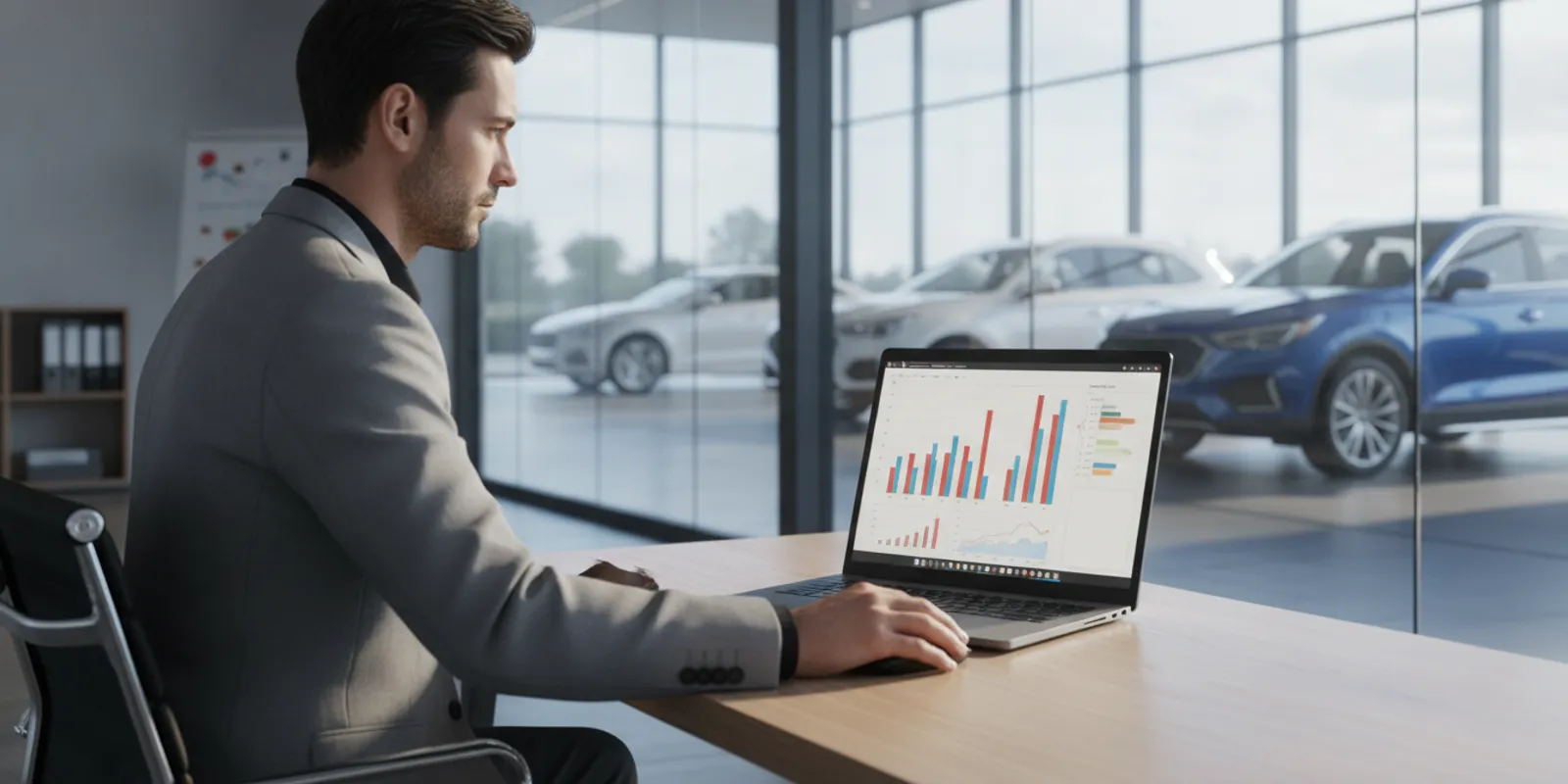
Choosing the best car dealer PPC partner is not just a matter of finding someone who can launch ads. The right partner should connect campaign strategy, useful tracking, persuasive creative, and dealership lead handling so you can understand what the advertising is contributing—and what needs attention next.
Explore dealership marketing services
Pay-per-click (PPC) can refer to paid search placements where advertisers pay for clicks. Dealerships may also use paid social campaigns, which commonly charge by impressions or other delivery goals rather than each individual click. In either case, a partner should be able to explain the plan, track meaningful actions, and show how marketing activity is handed off to the people who respond to shoppers.
What Should a Car Dealer PPC Partner Be Accountable For?
Start by defining what the dealership needs advertising to accomplish. “More traffic” is not a complete business objective. A campaign can produce clicks without producing useful inquiries, and an inquiry is not automatically an appointment or a sale. A sound evaluation follows the path from audience exposure to a shopper taking action, then asks what happens after that action.
Ask a prospective partner to map the work they will own and the work your store must handle. Depending on the scope, that may include research, account structure, campaign setup, ad copy or creative, audience and location settings, conversion tracking, budget pacing, optimization, reporting, and coordination with the dealership team. Request a clear explanation of exclusions too. For example, does the partner build landing pages, manage the CRM, respond to leads, or only send inquiries to your existing process? Do not assume that a marketing agreement includes services that are not written into it.
Good accountability means each stage has an owner. The partner should explain who reviews search terms, who checks tracking, who approves creative, who makes changes, and how the dealership will hear about issues. Your team should know who receives inquiries, how promptly they are contacted, and how outcomes are recorded. When responsibilities are vague, a weak result can be blamed on the campaign, the website, or the sales process without anyone diagnosing the actual gap.
How Should PPC Strategy Fit Your Dealership?
A dealership does not need a complicated campaign simply because an agency presents a complicated diagram. It needs a plan that reflects its market, sales priorities, available inventory, website experience, staff capacity, and budget. Ask the partner to explain the choices in plain language before authorizing a launch.
Clarify the shopper and the intended action
Ask which audience the campaign is intended to reach and what action it should encourage. A person searching for a particular vehicle may have a different need from someone looking for a dealership’s service department, trade-in information, or a general brand. The partner should show how campaign themes and landing destinations align with the goal. If several different goals are being mixed together, ask how results will be separated in reporting.
Review geography, timing, and budget assumptions
Confirm which locations are included, how the radius or geographic boundaries were selected, and whether the settings match where the dealership can serve shoppers. Ask how budget is distributed among campaigns and what happens when demand or available funds shift. A budget recommendation should include the assumptions behind it, not a promise of a specific number of leads or sales.
Discuss the competitive environment without accepting unsupported claims about what competitors spend or achieve. A prospective partner can explain how it will monitor campaign performance and adjust bids, targeting, or messaging using the information available in your account. Ask how often those decisions are reviewed and which changes would require your approval.
For paid search, ask how the campaign will separate searches with different intent. A shopper searching for a specific model, a dealership name, or a general vehicle category may be looking for different information. The partner should describe how it will organize campaigns and ad groups, select relevant search terms, and review the actual queries that trigger ads. Ask how irrelevant queries will be handled and how the team will avoid paying for traffic that does not fit the agreed objective. Request an example of the reasoning behind a keyword or exclusion, rather than a long list without explanation.
Clarify whether the proposal includes only search ads or also display, video, or paid social placements. These channels can have different targeting, creative, and measurement needs. A single blended report may hide those differences, so ask for channel-level views and a clear explanation of how shared budget will be allocated. The goal is not to use every available format; it is to understand what each part of the plan is intended to do.
Match campaign scope to operating capacity
Advertising creates work for the store when shoppers respond. Before expanding the campaign, consider whether the team can answer calls, reply to form submissions, and continue conversations across the channels the campaign uses. If the store cannot consistently process the volume it already receives, increasing clicks alone may not solve the underlying problem. Make the handoff part of planning, not an afterthought: identify coverage during business hours, evenings, weekends, and staff absences, then decide where the response will be logged. NADA’s Dealership Workforce Study covers workforce topics such as hiring trends, hours, and retention; it is staffing context, not a source for PPC performance benchmarks. If staffing capacity is changing, use that as a reason to confirm the store’s follow-up plan before increasing inquiry volume.
For a closer look at paid social as one part of the mix, see Facebook advertising for car dealerships. For a different perspective on connecting spend to business outcomes, review paid social advertising ROI for automotive dealerships. PPC partner selection should still begin with your store’s own goals and operating realities.
What Tracking Should You Expect?
Ask the partner to walk through the measurement path before campaigns go live. The explanation should cover how the dealership will distinguish an ad click from a meaningful action and how that action will be reviewed. The exact setup depends on the site, advertising platform, and agreed scope, so request specifics rather than assuming every account can track every outcome automatically.
At a minimum, discuss which of these events can be measured reliably:
- Ad impressions and clicks, with the relevant campaign and channel identified.
- Visits to the intended page or destination.
- Calls, form submissions, or other inquiry actions that the dealership considers meaningful.
- Whether an inquiry was reachable, relevant, and followed up.
- Appointments set, appointments kept, and later sales outcomes when the dealership can connect those records to campaign activity.
There is a difference between a tracked action and a verified outcome. A form submission may be duplicated, incomplete, or unrelated to a vehicle purchase. A click-to-call event may not tell you whether a conversation took place. Ask what each reported conversion actually means, what can cause it to be missed or counted twice, and how the team checks the data.
Agree on a shared source of truth where practical. The advertising platform, analytics tools, call records, and dealership CRM may not show identical counts because they define and attribute events differently. A responsible report explains those differences instead of presenting one number as unquestionable. Make sure the dealership retains appropriate access to its advertising and measurement accounts, and clarify who owns the data and setup if the agreement ends.
How Can You Compare PPC Partners?
Use a consistent scorecard when you meet with potential partners. It helps separate a clear working process from a persuasive pitch. The examples below are questions to ask, not a universal ranking; the best answer depends on your goals, resources, and the services included in the proposal.
| Evaluation area | Ask the partner | What a useful answer includes |
|---|---|---|
| Strategy | How will you choose campaign goals, audiences, geography, and budget? | Plain-language reasoning tied to dealership priorities, with assumptions and limits stated. |
| Tracking | Which actions will be recorded, and how will we validate them? | Defined events, account access, checks for errors or duplication, and known attribution limits. |
| Creative and destination | What ad message and page will a shopper see? | A relevant message, a matching destination, a review process, and clear approval ownership. |
| Lead handling | Who responds to inquiries, and how are outcomes shared? | Named dealership-side responsibilities and a practical way to record contact and appointment results. |
| Reporting | What will we review, how often, and what decisions can follow? | Readable metrics, context, explanations of changes, and next steps—not just a platform export. |
| Commercial terms | What is included, what costs extra, and how can we exit? | Written scope, fees, account ownership, approval steps, and termination terms. |
Score the answers, not the polish of the presentation. If one partner offers a low price but cannot explain measurement or account ownership, the apparent savings may come with less visibility. If another proposes a broad scope, confirm that your team needs and can support each part. Ask for sample reporting with sensitive client information removed, and ask the presenter to explain how a dealership would use it to make a decision.
What Should You Ask About Ad Creative and Landing Pages?
Ad creative sets an expectation. The page or destination should continue the same conversation. Ask to see how the partner plans to develop, test, and approve messages, and how it will make sure each ad directs shoppers to a relevant next step. A generic claim or mismatched destination can create confusion even when the campaign attracts attention.
Questions worth asking include:
- Who provides vehicle details, offers, images, and required approvals?
- How will the team check that prices, availability, and other changeable information remain accurate?
- What does the approval process look like, and who can stop or revise an ad?
- Does the proposed landing page make the intended action easy to find on a phone?
- How will calls and forms from the destination reach the correct dealership team?
Do not accept “we will optimize the landing page” as a full explanation. Ask what will change, how the change will be approved, and what evidence will be used to evaluate it. If a website, form, or phone-routing issue could prevent inquiries from reaching staff, resolve or account for it before treating campaign performance as a fair test.
How Does Lead Handling Affect the Campaign?
The advertising partner may generate an inquiry, but the dealership’s follow-up process influences what happens next. Set expectations for the handoff before launch: which team monitors each channel, how inquiries are assigned, what happens outside business hours, and where contact attempts and outcomes are recorded. Keep the process realistic for the store’s staffing and existing systems.
Review a small sample of inquiries together. Check whether the contact details are usable, whether the shopper’s request is understood, whether someone followed up, and whether the final outcome is recorded. This can reveal different problems: a tracking issue, a confusing offer, a slow handoff, or a follow-up gap. Avoid drawing a sweeping conclusion from one isolated lead, but do not ignore a recurring pattern.
For process ideas that focus specifically on dealership response, read how to build a faster dealership BDC lead response process and lead response optimization for automotive dealerships. Those topics complement PPC evaluation: campaign reporting is more useful when the store can connect inquiries to follow-up and appointment outcomes.
Which Metrics Belong in a PPC Review?
Use a group of metrics rather than relying on a single headline number. Clicks and click-through rate can help describe ad interaction, but do not show whether the dealership received useful opportunities. Cost per click can help explain media efficiency, but a low cost does not by itself indicate a good business result. Cost per inquiry can be useful only when the inquiry definition and quality checks are clear.
A practical review can move through these layers:
- Delivery: Did the campaign reach the intended audience and spend within the agreed plan?
- Engagement: Did people click or take another planned action, and did the destination load and function?
- Inquiry: How many identifiable calls or submissions arrived, and how many were relevant and usable?
- Follow-up: Were inquiries assigned, contacted, and updated in the dealership’s process?
- Business outcomes: Where can the store connect campaign inquiries with appointments, visits, and sales?
Ask the partner to label which measures are directly available and which depend on dealership data or manual reconciliation. Sales attribution can be incomplete when records do not connect across systems, so a report should state that limitation. Agree on the review cadence, the person responsible for delivering reports, and the questions each meeting will answer. If a metric changes sharply, ask what was checked before deciding whether to change the campaign.
Make each review meeting end with a short decision log. Record the issue being investigated, the change proposed, who approved it, when it took effect, and what signal will be checked next. Changing several campaign elements at once can make it harder to learn which adjustment mattered. A disciplined partner should be able to describe what it changed and why, while separating a planned test from an urgent correction to broken tracking or a destination that no longer works.
What Warning Signs Should You Watch For?
Be cautious when a proposal guarantees a specific number of leads, appointments, or sales without explaining assumptions and conditions. Campaign outcomes depend on factors beyond an advertiser’s control, including market demand, the offer, site experience, available budget, and dealership follow-up. A partner should explain what it can manage and what it cannot promise.
Other concerns include unclear account ownership, reluctance to share access, vague descriptions of fees, no written approval process, or reports that show activity without defining conversions. Be wary of a plan that treats every form submission as a qualified buyer or claims success without checking what happened after the inquiry. These issues are reasons to ask for clarification; they are not proof of misconduct by themselves.
Before signing, request the scope and reporting commitments in writing. Confirm how billing works, how much is media spend versus management or production fees, what happens to campaigns and data if you leave, and how changes are approved. The dealership should understand the arrangement well enough to explain it internally.
How Should You Make the Final Decision?
Compare partners against the same priorities, then identify the trade-offs. One provider may offer a narrow campaign-management scope; another may include creative or broader channel coordination. Neither is automatically better. Choose the arrangement your dealership can evaluate, support, and maintain—not simply the one with the longest list of services.
Before committing, write down the initial objective, the campaign scope, the tracking definitions, who handles inquiries, when reporting will arrive, and what conditions would trigger a review. Set a reasonable evaluation period based on the campaign and agree that early data is for diagnosis, not proof of long-term results. If the plan changes, document what changed and why so future comparisons remain useful.
Dealerships considering BDC Promotions can review its automotive marketing services and discuss how its verified paid advertising capabilities may fit a dealership’s goals. Ask specific questions about scope, measurement, creative approval, and the handoff to your store team before making a decision.
Schedule a dealership marketing strategy call
The best car dealer PPC partner is the one that makes the plan understandable, measures what it can verify, and works with your dealership to improve the full path from ad response to customer conversation.