A dealership can generate plenty of inquiries and still struggle to create enough sales opportunities.
Book a dealership strategy call with BDC Promotions.
The difference is usually not the number of names in the CRM. It is what happens after a shopper raises a hand. The message should match their intent, someone should respond promptly, and the inquiry should reach the right person.
The conversation also needs to move toward a clear next step.
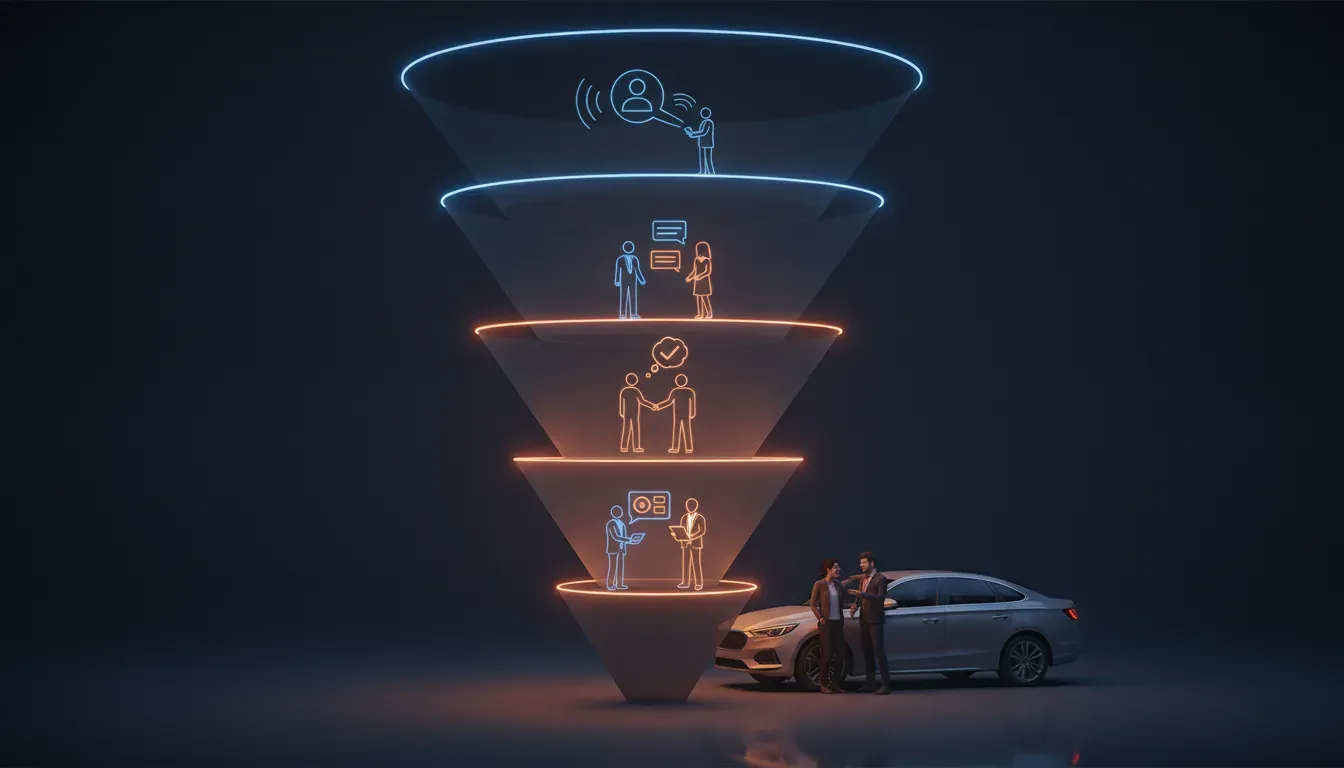
Effective automotive lead generation turns marketing attention into qualified conversations and appointments by connecting relevant campaigns with fast response, thoughtful engagement, consistent qualification, and measurable follow-up.
That makes the funnel easier to manage. Do not treat every captured contact as an outcome.
Dealership owners and marketing managers can evaluate the opportunity at each handoff, from the first inquiry through appointment setting and reporting. Start by defining what a productive lead should produce for the dealership.
What Should Automotive Lead Generation Produce?
Automotive lead generation is the process of attracting dealership shoppers, capturing their information, and creating a clear path to a useful sales conversation. That path may begin with a paid social ad, a vehicle inquiry, a trade-in question, or another response from a shopper who has shown interest. The form submission is only the starting point. The real objective is to help the dealership understand the shopper's intent and move the opportunity to the right next step.
That distinction matters because a captured contact is not automatically a qualified lead. A captured contact has supplied information, such as a name, phone number, or email address. The dealership still needs to determine whether the information is valid, what the shopper wants, how soon they may act, and which team member should respond. A qualified conversation goes further: the shopper is engaging with the dealership and discussing a relevant vehicle, payment question, trade-in, availability concern, or visit. An appointment is a defined commitment to continue that process, such as a scheduled showroom visit or vehicle-related conversation at an agreed time.
Lead volume can obscure these differences. Cox Automotive analyzed 3,420,653 leads received through six third-party listing sites in the first quarter of 2019. The analysis found that 6.2% of leads resulted in a sale on average, with source-level sold rates ranging from 4% to 10.9%. Cox's conclusion was direct: lead volume does not equal lead quality, and dealerships should prioritize quality over quantity when evaluating lead sources. Read Cox Automotive's analysis of lead quality.
For dealership operators, a productive program therefore needs more than a monthly contact count. It should connect marketing activity to engagement, qualification, routing, and appointments. BDC Promotions positions its work around that broader handoff, combining paid social, lead engagement, and customer communication so inquiries can receive fast, professional follow-up. The practical question is not simply how many leads arrived. It is how many became real conversations, how many reached the appropriate dealership personnel, and how clearly the team can measure what happened next.
How Can Dealerships Attract Higher-Quality Leads?
Higher-quality dealership leads usually start with a closer match between the shopper's intent and the message they see. A promotion for a specific SUV should lead to current information about that SUV. A payment-focused message should make the next step about payment questions, trade-in details, or financing. When the promise in the ad or search result matches the experience on the landing page, shoppers can make a more informed decision before contacting the dealership.
Inventory relevance matters just as much. Campaigns should point shoppers toward vehicles, trims, services, or offers the dealership can actually discuss. Clear details about availability, model fit, trade-in needs, and the preferred next step help reduce vague inquiries. The goal is not to make every visitor complete a form. It is to give the right shopper a useful reason to start a conversation.
Make the first step useful, not unnecessarily difficult
A form can be an effective capture path, but it is only one part of automotive lead generation. A shopper may prefer to call, text, use chat, request a trade-in estimate, explore payment options, or begin a digital retailing workflow. Keep required fields limited to information the team will use, and explain what happens after submission. Name, a valid contact method, vehicle interest, and a relevant question may be enough to begin qualification. Additional questions should earn their place by improving routing or the quality of the follow-up.
Cox Automotive describes digital retailing as a way for shoppers to complete steps online and learn more about a deal before submitting contact information. Its examples include estimated financing or leasing rates when systems are integrated with financial partners, as well as submitting trade-in information for a valuation. Cox also reported that seven in ten consumers surveyed were more likely to buy from a dealership if they could start the process online. These tools should support an informed conversation, not create a maze that delays human help. Read Cox Automotive's analysis of lead quality and digital retailing.
Review each capture path against the same question: does it help the dealership understand intent and give the shopper a clear next action? Forms, calls, messages, and digital retailing can all contribute when they connect to accurate inventory context, prompt routing, and a consistent follow-up process.
Why Do Speed and Response Quality Decide the Next Step?
A dealership lead is not finished when a form reaches the CRM. The next step depends on whether someone responds while the shopper is still engaged, answers the actual question, and makes ownership clear. A fast acknowledgment that says little may not move the conversation forward. A useful response connects the inquiry to the vehicle, trade, financing question, or appointment request that prompted it.
The 2026 Pied Piper study evaluated dealership responses to vehicle-specific inquiries through email, telephone, text, and chat over the following 24 hours. Its secret-shopper inquiries included a customer name, email address, telephone number, and a question about an in-stock vehicle. The study assessed more than 20 weighted response metrics across 3,290 dealership websites. Franchise dealerships representing 33 brands averaged an Internet Lead Effectiveness score of 71 on Pied Piper's 100-point scale. Read the study details at Auto Remarketing.
Speed is only one part of that picture. Pied Piper defined a perfect response as answering the shopper's question through multiple paths, including email, text, and phone, within 15 minutes. In the study, 51% of dealers achieved that definition. The finding gives managers a practical standard to examine, not a promise that every shopper wants the same channel or that faster contact alone creates an appointment.
Response quality also depends on routing and ownership. If an inquiry is incomplete, misrouted, or trapped between systems, a response trigger can fire without the customer's question being answered. Human-help situations in the study scored nine points lower on average and were twice as likely to receive no personal response. Your dealership lead response process should therefore define who reviews exceptions, who follows up, and when the next action is documented.
A practical response check
- Confirm the inquiry arrived in the correct CRM record with the shopper's contact details and vehicle context.
- Answer the specific question before adding a general sales message.
- Use an appropriate second channel when the shopper has provided permission and contact information.
- Assign one owner for the next action, such as a call, availability update, or appointment discussion.
- Record the response, handoff, and disposition so managers can review what happened.
This discipline turns automotive lead generation into an operating process. Marketing creates the opportunity, but response speed, useful communication, and accountable routing determine whether the opportunity receives a meaningful next step.
How Does Multi-Channel Engagement Move Shoppers Toward Appointments?
A shopper may begin with a form, a social message, an email, or a question about a specific vehicle. The next step should not depend on forcing every person into the same channel. It should depend on recognizing the shopper's intent, responding where the conversation started, and using the dealership's CRM context to keep the handoff organized.
Phone, text, and email each support a different part of that process. A phone call can clarify a complicated question quickly and create a direct path to a salesperson or BDC representative. Text can make it easier to confirm availability, answer a short question, or suggest an appointment time. Email gives the dealership room to provide fuller information when the shopper needs to compare options or review details before responding. The right mix is responsive rather than repetitive.
Industry response data illustrates why a coordinated approach matters. The 2026 Pied Piper study found that dealers used text to answer inquiries 54% of the time, up from 38% in 2025. Phone calls appeared in 75% of responses, compared with 66% the prior year. The study also reported that 62% of dealers used a phone call together with email and/or text, up from 49% the previous year. These figures describe observed dealer responses, not a guaranteed formula for every store. Read the Auto Remarketing analysis of the Pied Piper study.
Messenger can serve a similar role for shoppers who engage through social media. A fast, professional reply can keep the conversation active, answer an initial question, and create a natural opening to ask whether the shopper would like to visit or speak with someone. BDC Promotions documents multi-channel engagement across Messenger, email, phone, and CRM-connected follow-up, with leads routed to appropriate dealership personnel.
The CRM is the connective tissue. It should preserve the original inquiry, channel, vehicle or topic, prior responses, and next action so a human team member does not make the shopper repeat the conversation. That context also supports accountability: the dealership can see whether the inquiry was answered, who owns the next step, and whether an appointment was requested or set.
Human handoff remains essential when a shopper asks for judgment, has a complex trade or financing question, or signals readiness to visit. Automation can start and organize the conversation, but an assigned person should take ownership of the decision point. The goal of automotive lead generation is not to collect another message. It is to turn useful engagement into a clear, respectful next step, such as a confirmed appointment or a scheduled follow-up.
What Does Qualification and Appointment Handoff Look Like?
Qualification is the point where a dealership turns an incoming inquiry into useful context for a real conversation. The goal is not to force every shopper into the same script. It is to understand what the shopper wants, determine the appropriate next step, and make sure ownership is clear before interest fades.
- Confirm intent. Start by acknowledging the shopper's question and confirming what prompted the inquiry. Is the shopper asking about a specific vehicle, comparing options, considering a trade, or looking for a time to visit? The first response should answer what can be answered and identify what still needs a dealership team member. This matters because the 2026 Pied Piper study found that situations requiring human help scored nine points lower on average, and those shoppers were twice as likely to receive no personal response. Read the study's findings on human handoffs.
- Capture context. Record the shopper's name, preferred contact method, vehicle or vehicle type, timing, and the question that brought them in. Validate the contact details without treating a completed form as proof of purchase intent. A historical SEC-filed dealer agreement used a name plus a valid phone number or email as a basic qualified-inquiry definition. The agreement also stated that an inquiry expressed interest and did not necessarily lead to a sale. That is useful historical context, not a current policy or universal industry standard. See the historical agreement language.
- Route the owner. Send the inquiry, conversation history, and stated need to the dealership employee best positioned to help. Routing should account for department, vehicle knowledge, availability, and the shopper's preferred channel. BDC Promotions documents lead routing to appropriate dealership personnel alongside phone, email, CRM, and other communication channels.
- Set the next action. Replace a vague promise to follow up with a specific next step: a call, text, email, vehicle walkaround, availability check, or appointment request. The action should have an owner and a reasonable time. Dealership customer-management systems commonly support tracking leads and scheduling appointments, which makes this handoff easier to manage when the record is complete. Review the dealership systems research.
- Document disposition. Record whether the shopper received an answer, accepted an appointment, requested later contact, became unreachable, or needs additional qualification. This creates a usable history for the sales or BDC team and lets managers distinguish lead volume from qualified conversations and appointment activity. It also gives the dealership a clear starting point for reviewing where handoffs are working and where shoppers are being lost.
Which Automotive Lead Generation Metrics Matter Most?
A dealership can report a healthy number of new leads and still have a weak funnel. The more useful question is whether those inquiries were real, reached the right person, received a timely answer, and progressed toward an appointment. BDC Promotions views automotive lead generation through that full-funnel lens, with appointment generation and shopper engagement carrying more weight than raw volume.
| Metric group | What it tells you | Useful questions |
|---|---|---|
| Volume | How many inquiries a campaign or source produced. | Did inquiry volume change by source, vehicle, offer, or channel? |
| Quality | Whether inquiries contain usable contact details and meaningful purchase context. | Can the team identify the shopper's intent, vehicle interest, and preferred next step? |
| Response | How quickly and thoroughly the dealership answers across available channels. | Was the question answered, and did the response reach the shopper by phone, email, text, or chat? |
| Appointment | Whether qualified conversations become scheduled and completed visits. | How many appointments were set, confirmed, and ultimately shown? |
| Revenue readiness | How reliably the funnel connects marketing activity to sales opportunities. | Can the CRM connect the source and conversation to a disposition without overstating attribution? |
Response quality deserves its own dashboard view. Use outside benchmarks as context, not as a substitute for your dealership's own appointment and sales data.
| Benchmark | Reported finding | How to use it |
|---|---|---|
| Internet Lead Effectiveness | Pied Piper reported an average score of 71 for franchise dealerships representing 33 brands, based on more than 20 weighted response metrics from inquiries submitted to 3,290 dealership websites. | Use the methodology as context while building a store-level response baseline. Read the Auto Remarketing study details. |
| Perfect response | 51% of dealers delivered an answer through multiple paths, including email, text, and phone, within 15 minutes, as defined by the study. | Audit both response speed and whether the message answered the shopper's question. This is not a sales guarantee. |
| Channel coordination | The study reported text in 54% of responses, phone in 75%, and phone combined with email and/or text in 62%. | Compare your channel mix with shopper preferences, permissions, response quality, and appointment outcomes. |
Attribution also has limits. A shopper may see an ad, return through an organic result, call directly, and submit a form later. CRM records can be incomplete when calls, chats, offline visits, and duplicate inquiries are not connected. Use source data to identify patterns, then reconcile it with appointment and sales dispositions. BDC Promotions supports that practical measurement approach by combining lead engagement, communication, routing, and follow-up instead of treating a captured form as the final result.
How Should Dealerships Audit the Funnel Each Month?
A monthly funnel audit should answer a practical question: where did shopper interest slow down between the first inquiry and the appointment? Review the same stages every month so the team can separate a traffic problem from a response, routing, qualification, or handoff problem.
1. Check the path from inquiry to appointment
Start with source, campaign, vehicle or offer, contact details, response time, number of meaningful follow-ups, qualification status, and appointment outcome. Compare lead volume with qualified conversations and appointments, not just form submissions. A rise in inquiries is not an improvement if the team cannot reach shoppers or move them to a next step.
Then test the data path yourself. Pied Piper cautions that incomplete data, misrouted inquiries, and failed communication integrations can prevent a shopper's question from being answered even when a response trigger fires. Review the finding and inspect each integration, including form delivery, CRM logging, routing rules, and ownership.
2. Compare experience with dealership goals
Review whether shoppers can complete the steps your dealership expects online, then compare that experience with appointment performance. Cox Automotive's 2024 digitization study found that the share of dealers offering every purchase step online increased from 34% in 2022 to 43% in 2024. The same study reported that 65% of shoppers said they would conduct some or most of the purchase process online. These figures do not set a target for every store, but they provide useful context for deciding whether friction is limiting demand.
3. Make one operational change
Choose the largest verified leak and assign one owner to fix it before the next review. That might mean correcting a routing rule, clarifying who handles after-hours inquiries, improving a first response, or adding a qualification field that helps the team prepare for the conversation. Record the change, its start date, and the metric it should influence. The next month, keep the change only if the evidence supports it.
This disciplined loop keeps automotive dealership marketing connected to the outcome BDC Promotions documents: generating appointments through responsive, professional shopper engagement. For a review of your current funnel, call BDC Promotions at 352-207-1074.
Ready to connect lead quality, response, and appointments? Book a BDC Promotions strategy call.
Frequently Asked Questions
How do I generate my own auto leads?
Start with an offer and message that match the vehicles, audience, and buying stage you want to reach. Use channels such as paid social, search, website forms, calls, and messaging, then make the next step clear and easy. The work does not end when someone submits a form. Route the inquiry promptly, respond with useful information, and track whether the conversation becomes an appointment.
Do car dealerships pay for leads?
Some dealerships pay for advertising, lead-generation campaigns, third-party inquiries, or marketing services. The cost structure varies by provider and agreement, so compare more than the number of contacts delivered. Review lead source, buying intent, duplicate or invalid inquiries, response ownership, appointment outcomes, and how performance is reported before deciding whether a channel is worthwhile.
What CRM do most car dealerships use?
There is no single CRM that fits every dealership. The practical choice is the system that your team will use consistently and that supports lead capture, routing, follow-up, appointment scheduling, activity records, and reporting. Before selecting a platform, confirm that it connects with your website and advertising sources, gives managers visibility into response activity, and fits the dealership's existing sales process.
How can a dealership tell whether its leads are high quality?
Define quality around the next valuable action, not contact volume alone. Track whether an inquiry includes usable contact details, reflects genuine vehicle-shopping intent, receives a relevant response, and progresses to a conversation or appointment. Review these measures by source and campaign so you can shift attention toward channels producing workable opportunities.
Ready to improve your dealership's lead process?
A practical review can help connect lead quality, response, qualification, and appointment generation into one measurable workflow. Call BDC Promotions at 352-207-1074 to discuss an automotive lead generation and appointment-generation approach for your dealership.